
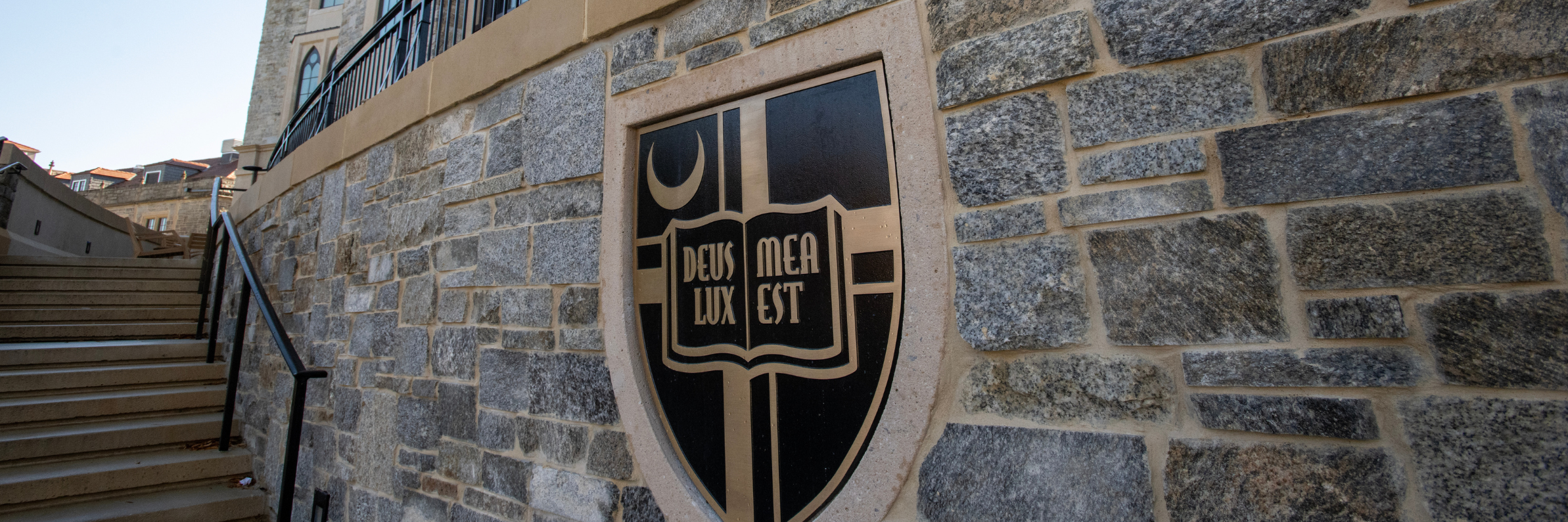
Nursing is a signature academic field at The Catholic University of America, attracting talented students from diverse backgrounds. Reflecting the strength of the program, the Conway School of Nursing is ranked #28 on the U.S. News and World Report’s list of the best undergraduate nursing programs, and our master’s and doctoral programs are ranked in the top 75.
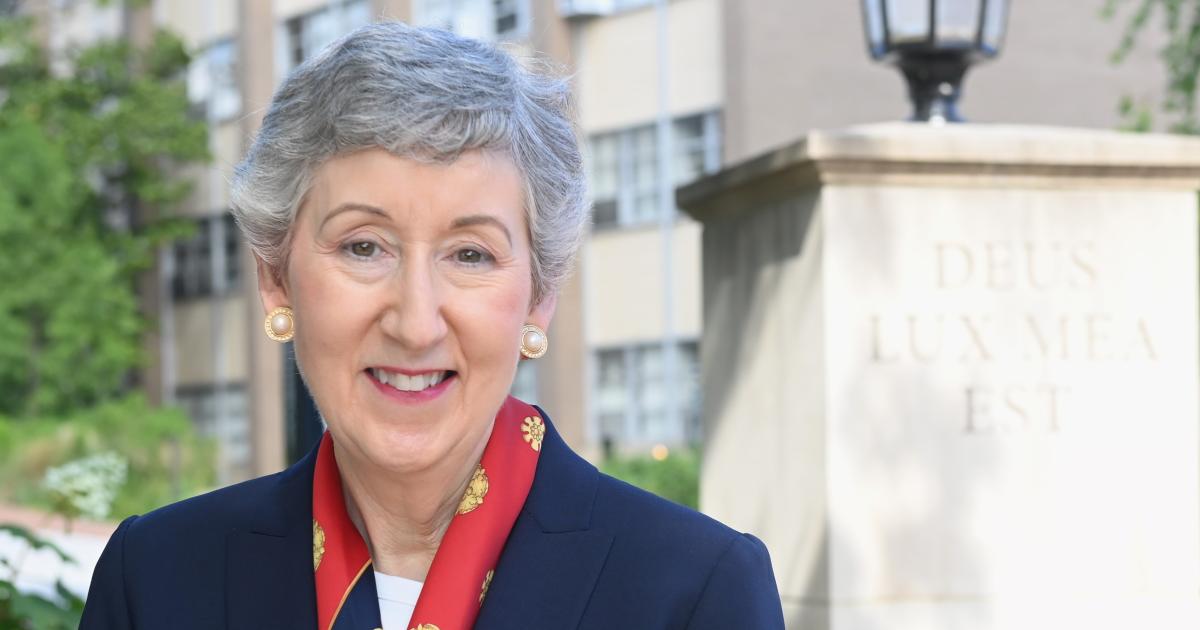
The University offers a range of academic programs to meet the needs of students, including a 12-month Accelerated Bachelor of Science in Nursing (A.B.S.N). In this Q & A, we feature Kristina Leyden, Ph.D., APRN, FNP-BC, CHSE, who joined the University in 2025 as assistant dean of the A.B.S.N. program and a clinical professor.
Leyden shares about her call to nursing, developments in the field, and the unique strengths of the nursing curriculum at Catholic University. In honor of Women’s History Month, Leyden reflects on how women have historically shaped the field of nursing.
What drew you to a career in nursing and to a leadership role at The Catholic University of America?
For me, nursing is absolutely a call. I love that nursing brings together science, service, and human connection. Nurses are present at some of the most vulnerable moments in a person’s life and that responsibility requires both clinical expertise and compassion. I always say, “Being at someone’s birth or death is a gift.”
What drew me to The Catholic University of America was its mission. The University approaches nursing education through a lens that recognizes the dignity of every person. That perspective shapes how we educate nurses, not just as clinicians, but as professionals who understand the ethical responsibilities that come with caring for others.
Nursing is having a moment - on campus and as an in-demand career. What is driving those trends?
There is certainly strong workforce demand as healthcare expands and the population ages. But many people are also seeking careers with meaning and purpose.
Students increasingly want careers where they can make a tangible difference in people’s lives.
Nursing offers that opportunity while also providing a wide range of career paths—from bedside care to leadership, advanced practice, research, and policy.
What is special about the nursing program at Catholic University?
Our program combines rigorous scientific preparation with ethical formation. Healthcare involves complex decisions, and we want graduates who are prepared both clinically and morally.
Very few accelerated nursing programs include biomedical ethics as part of the curriculum. At Catholic University, that is an intentional component so students learn to navigate difficult healthcare decisions with both competence and compassion.
We also build opportunities for students to reflect on their clinical experiences. Nursing students often encounter situations that are unexpected or emotionally difficult and structured reflection helps them process those experiences and build resilience.
Learning how to reflect on difficult clinical experiences is an important part of forming resilient nurses.
Our curriculum is also designed differently from many programs. We require fewer stand-alone prerequisites because we integrate foundational science directly into the nursing curriculum where it is needed.
Finally, we are fortunate to have exceptional faculty, many with years of experience in online and hybrid nursing education, which is especially valuable in an accelerated program.
What scholarships and resources are available to nursing students? How is philanthropy advancing the program’s mission?
Scholarships are essential in helping students pursue nursing, particularly in an accelerated program where many are making a significant career transition. Currently, students apply for external scholarships. We are looking for donors!
Philanthropy allows us to support students while also strengthening the program through investments in simulation technology, student resources, and expanded clinical learning opportunities.
Why did the University launch a new Accelerated Baccalaureate of Science in Nursing Program (A.B.S.N.)? Who is the target student population?
The accelerated program was created in response to workforce needs and the growing number of individuals who feel called to nursing after completing a degree in another field.
Our students come from diverse backgrounds, science, business, public service, and more, one of our students has a Ph.D.! They bring maturity and perspective that enrich the learning environment.
Many of these students have always felt the call to nursing, but for whatever life reason, were not able to fulfill it. The accelerated pathway is perfect for those to transition from their previous experience.
The program allows them to transition efficiently into nursing while maintaining the same rigorous academic and clinical standards.
Could you speak about how technology shapes the A.B.S.N. program and the role of simulation?
Technology plays an important role in how we design the program. Courses are intentionally built within the learning management system so they are streamlined and easy to navigate. In an accelerated program, students move quickly through demanding material, so we want them focused on learning rather than searching for assignments or resources.
In an accelerated program, clarity and structure in the learning environment matter just as much as the content itself.
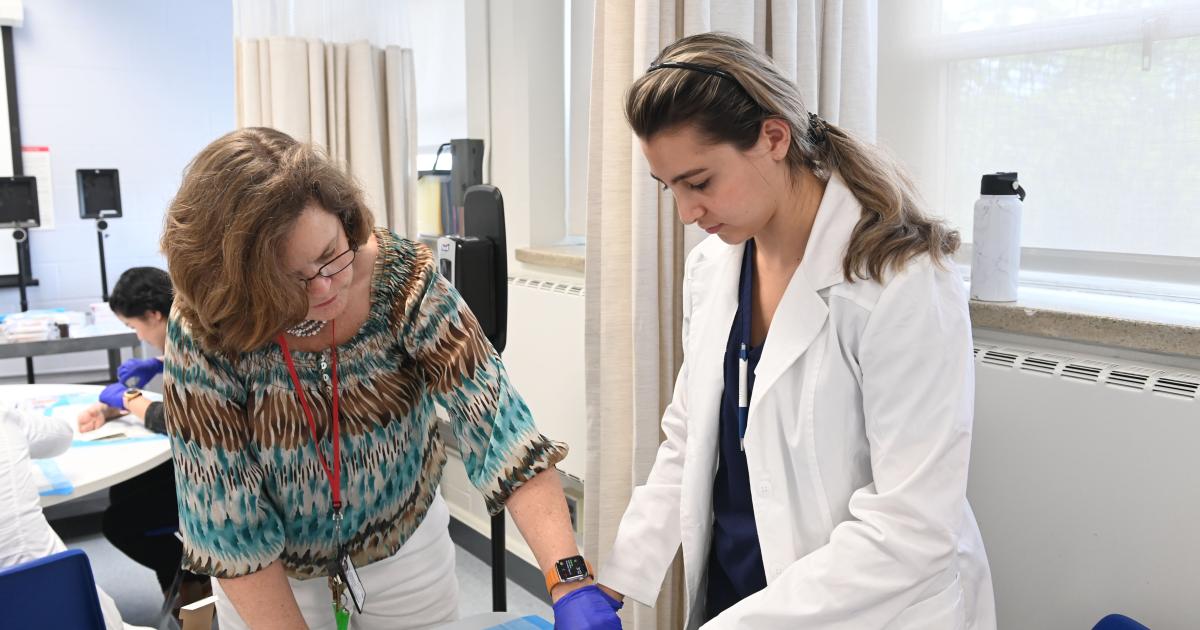
Simulation is another key component. High-fidelity simulations allow students to practice responding to complex patient scenarios, such as postpartum hemorrhage. These are scenarios we don’t want to have in the program, but need to prepare for in a safe environment.
The simulations build clinical judgment and confidence before students encounter similar situations in the hospital.
How does the A.B.S.N. program further the nursing school’s mission of providing compassionate and ethical care in a unique way?
The students in the accelerated program feel a strong sense of calling to nursing. They often come to the profession after time in another career and want work that directly serves others.
Because of that, the program becomes an environment where students develop strong clinical skills while also reflecting on the deeper responsibility of caring for people in vulnerable moments. The ethical foundation of the curriculum, including biomedical ethics, helps them approach nursing as both a profession and a vocation.
Stepping back, in light of Women’s History Month, how do you think the role of women has shaped the field of nursing historically?
Women have played a foundational role in shaping nursing into the profession it is today. Long before nursing became the highly specialized field we see now, women, often through religious communities, were leading the way in caring for the sick and advocating for patients.
That legacy is also part of Catholic University’s own history. Sister Mary Olivia Gowan, a Benedictine sister and nurse leader, helped establish the nursing program at Catholic University in 1935 and served as its first dean. The original nursing building on the Catholic University campus is named after her.
The history of nursing is deeply connected to women who saw caring for others as both a profession and a vocation.
Interested in contributing to scholarships for the A.B.S.N. program? Contact Elena Forbes, Director of Advancement, School of Nursing and National Catholic School of Social Service at 75forbes [at] cua.edu (75forbes[at]cua[dot]edu) or 202-319-6458.
Published on: Friday, March 13, 2026 by Audrey Hill
Tags: Conway School of Nursing