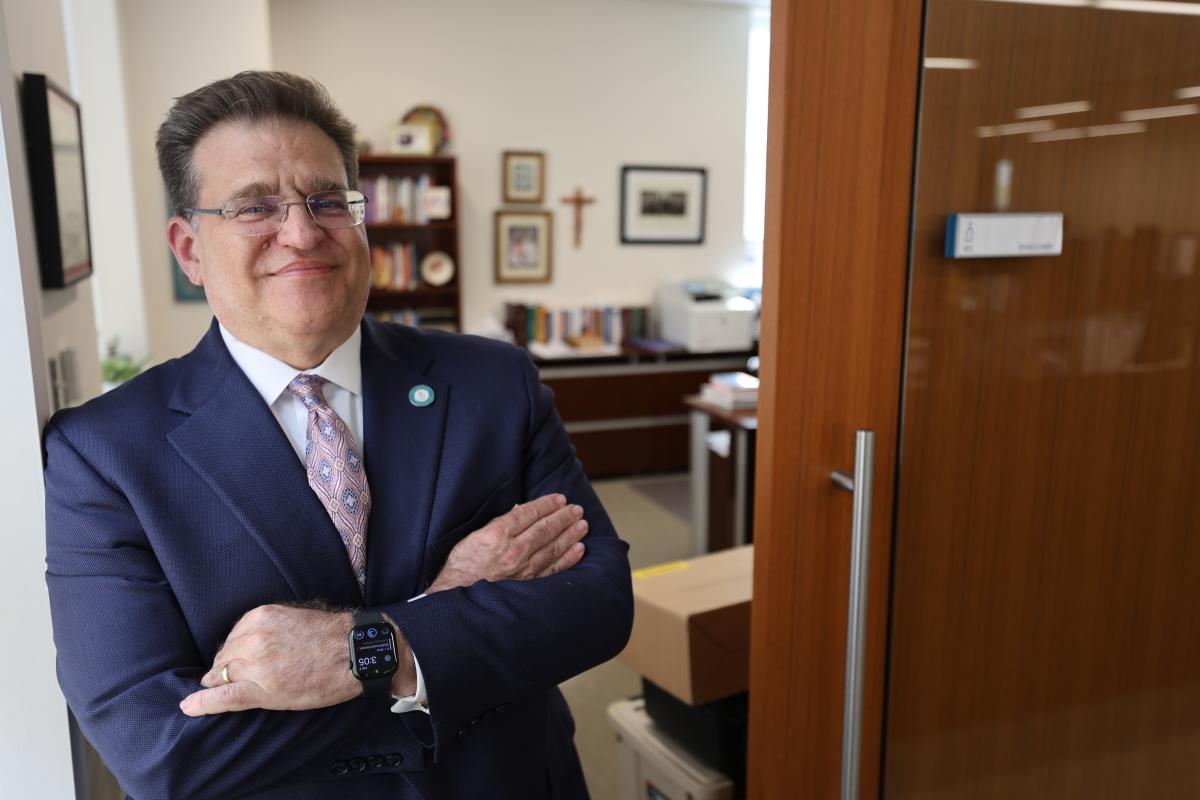

Ozhan Kazempour is a NCSSS graduate student pursuing a masters in social work degree. In this interview, he shares why he chose Catholic University and highlights how our innovative trauma-informed training is preparing him for a career as a well-rounded clinician. Learn more about his academic journey.
Why did you choose to attend Catholic University?
I chose Catholic University because of its long history in social services and advocacy, particularly through the Catholic tradition of social justice and service. I also needed to remain local at the time, as I was working as a line cook when I began the program. Catholic University allowed me to pursue graduate education while continuing to work, and the program’s emphasis on both clinical practice and social justice aligned well with my interests.
What inspired you to go into social work?
I had always been told that I was a good listener, but it wasn’t until after I graduated from George Washington University with a degree in statistics that I began to think seriously about becoming a therapist. I chose statistics because it made sense to me and kept my options open, not because I was particularly passionate about it. After graduating, I realized that I was more interested in understanding people than data.
I spoke with several practitioners about the different paths to becoming a therapist, and the most thoughtful and competent clinicians I consulted all recommended the social work route. They emphasized that social work provides strong clinical training while also grounding practitioners in social justice, cultural competence, and structural and systems-based thinking. That combination—therapy within a broader understanding of social structures and culture—ultimately convinced me that social work was the right path.
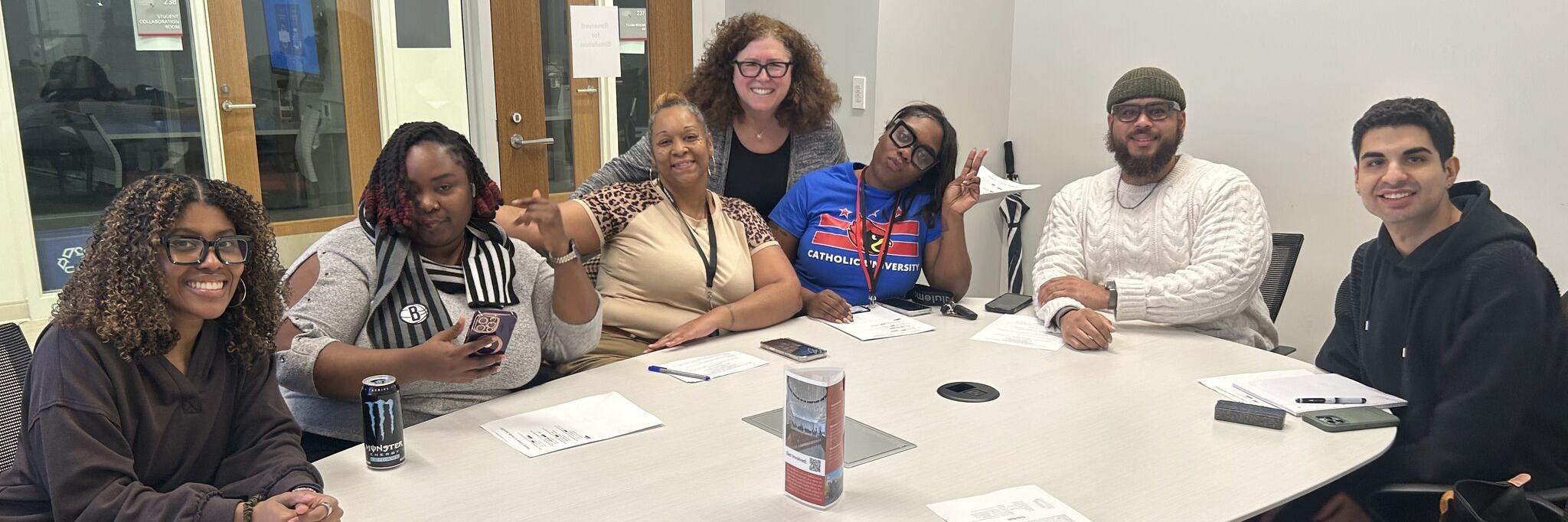
You recently participated in a simulated learning experience as a part of the Trauma-Informed Practice Scholars Program (pictured above). Can you share a bit about what that experience was like?
The simulation involved working with an adolescent in an emergency room setting after a motor vehicle accident and delivering the news that her father was in a coma. The exercise was designed to apply trauma-informed care principles in a high-stress clinical moment, particularly focusing on safety, transparency, choice, collaboration, and emotional regulation.
What struck me most was how difficult it is to deliver painful information directly, even when you know that transparency is clinically and ethically necessary. Observing another group first showed how easy it is to unintentionally avoid clarity in an attempt to protect a client from distress. However, trauma-informed practice emphasizes that uncertainty and euphemism can actually increase anxiety, because clients often sense that something is being withheld.
During our simulation, we focused on being calm, direct, and transparent while also prioritizing emotional regulation and giving the adolescent as much choice and control as possible. When her distress increased, the focus shifted from delivering information to helping regulate her nervous system through grounding, breathing, and supportive presence. The experience reinforced for me that trauma-informed care is less about saying the perfect words and more about pacing, tone, emotional regulation, and the ability to remain present with someone in distress without trying to rush or fix the situation.
Overall, the simulation made clear that trauma-informed care is not just a philosophy but a disciplined clinical practice that requires clarity, emotional regulation, teamwork, and the willingness to remain present when someone’s world has just changed.
I would strongly recommend that simulations like this be incorporated throughout the clinical curriculum, as they allow students to translate theoretical knowledge into practice under emotionally realistic conditions. In my view, this kind of experiential training is not peripheral to clinical education but central to it.
What are your career aspirations for when you graduate?
My long-term goal is to complete psychoanalytic training, because I believe psychoanalysis offers significant explanatory depth for understanding human behavior, relationships, and internal conflict. In the shorter term, I want to gain as much practical experience as possible. I currently work full-time as a supportive housing case manager, and that work has been very formative.
I am also interested in family therapy, child and play therapy, and potentially pursuing training through the Bowen Center in family emotional systems theory. Broadly speaking, I want to become a well-rounded clinician with strong clinical skills, a solid theoretical foundation, and experience working with individuals, families, and systems.
Published on: Monday, June 15, 2026
Tags: NCSSS, advancement, academic environment