
Welcome to Cardinal Perspectives, a series featuring in-depth conversations with alumni, students, faculty, staff and the extended family and community of The Catholic University of America.
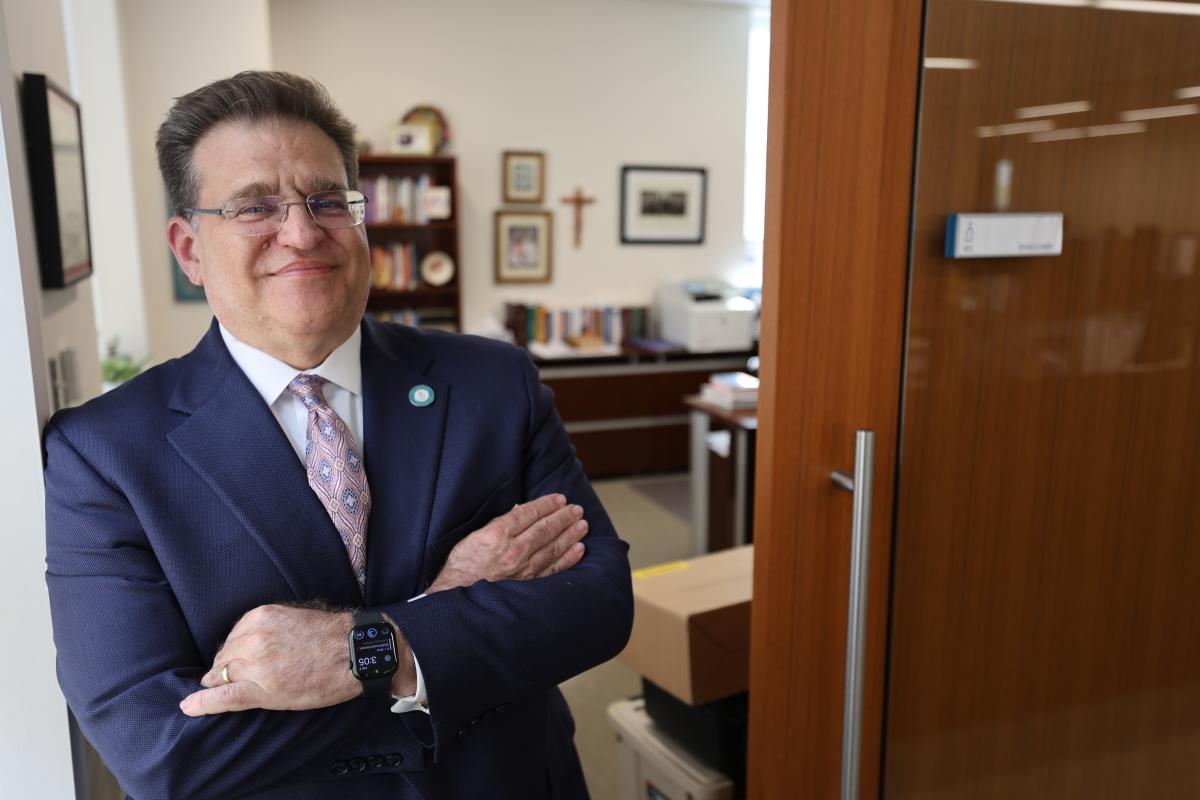
Brian Kennedy, B.A. 1983, J.D. 1992, is a Catholic University alumnus whose fingerprints are all over the history of Cardinals Lacrosse. After graduating as a double major in economics and politics, Brian went on to earn his J.D. from the Columbus School of Law before building a career as a trust and investments executive, including time as acting head of the New York Trust Office of Fidelity Investments.
As a student, Brian founded the club lacrosse team. Over the decades, Brian has remained one of the University's most active and devoted alumni, playing a central role in building and sustaining the lacrosse alumni community, bridging the gap between the club era and the varsity program, and keeping generations of Cardinals connected to one another and to the University they love.
That dedication extends to the highest levels of University volunteerism, where Brian serves on the Catholic University Alumni Association Board of Directors. And in perhaps his most lasting act of commitment, Brian has established the Brian F. Kennedy Endowment Fund for Lacrosse Coaching Excellence through a generous estate gift, ensuring that future Cardinals will be coached, developed, and inspired at the highest level for generations to come.
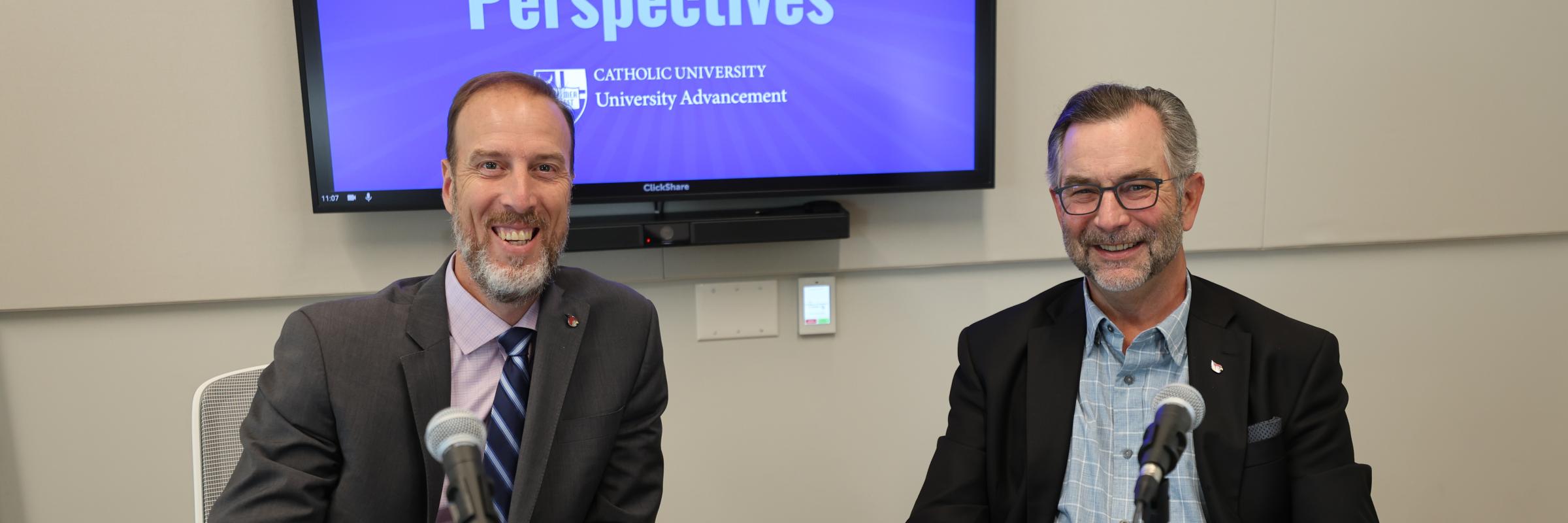
This conversation is facilitated by Kevin Robinson, vice president for Athletics and Recreation at Catholic University.
Kevin Robinson
All right. Welcome to Cardinal Perspectives. I'm Kevin Robinson, vice president of athletics and recreation at The Catholic University of America. And with us today, our distinct pleasure to have Brian Kennedy, a 1983 alumnus of Catholic University and one of the founding fathers of men's lacrosse at Catholic University. Brian and I go back about three years now, since I started.
Brian Kennedy
A very happy day for us.
Kevin Robinson
Yes, exactly. When I got to Catholic University, one of the first alumni I met. And since that day, our friendship has blossomed. And I got to know a lot about Brian's commitment to Catholic University, commitment to the men's lacrosse program and lacrosse programs in general at Catholic University. In fact, Brian has made a transformational commitment to Catholic University Athletics to establish the Brian F. Kennedy Endowed Fund for Lacrosse Coaching Excellence, which we'll talk about a little bit down the road. But, really just thankful for your time today, Brian, and for your commitment to Catholic University. I'm excited for this conversation.
Brian Kennedy
Happy to do it. You referred to some of our earlier conversations, and I think our very first one, we basically went down our own personal lists of quality leadership books that we loved.
Kevin Robinson
Legacy by James Kerr. Let’s go.
Brian Kennedy
“Sweeping the Sheds.” For those that don't understand, “Sweeping the Sheds,” a chapter in James Kerr's book, Legacy, is about the New Zealand All Blacks and how no matter how good the player on what is maybe the best rugby team in the world, you swept the sheds, you made sure everything was taken care of. No detail is too little for you to care about. Which is part of what Catholic University Lacrosse is. And I can say, having read some of the leadership books that Kevin has recommended, it's what Kevin's about. So, to be here to be having a conversation with you today is just really something I value. Thanks.
Kevin Robinson
And like I said, I value all of our conversations, Brian. Just that commitment to helping our student-athletes have the same type of experience that you had, and even take it to another level. It is just awesome. And always love your perspectives on how we can continue to grow and get better. So I'm looking forward to diving in.
And you know what? No better place than the start than the beginning. What were those first opportunities at Catholic University for you?
Brian Kennedy
Really the first opportunities were just showing up and having a good time. From the very beginning, friendship, brotherhood, a sense of community, that really continues today, not only amongst my contemporaries, but amongst some of the younger alumni, especially the lacrosse alumni I've come to know, is one of the things that makes Catholic University special. Maybe lacrosse was my idea to begin with, but it was my friends and me. One of my favorite phrases that got this thing going, is the “founding fathers.” And I think that sense of community, that sense of brotherhood, that just permeated campus is part of what helped drive our success.
Kevin Robinson
I think that brotherhood, that sense community that I think we all feel at Catholic University, happens because of the the leadership at the university, those mentors, those those faculty members, those coaches who have been present going back to 1887.
Talk to me about some of those people who were influential in your life and helped you in your leadership and Catholic University journey.
Brian Kennedy
First, I'll talk about some of the student mentors that I had. Because if you remember, and this dates me a little bit, I started here in 1976, post-Watergate. You know, there was a strong what-can-I-do-to-help-the-country activist culture going on that day.
Here on campus, there were two main leadership groups, one led by a gentleman by the name of Tom Donilon on North Campus up near Flather Hall. And then another guy named Tim Lisante, who was in Spalding Hall on South Campus (Spalding doesn't exist anymore). But back in the day, it was a venerable place and a fun place.
But, you know, Tom was about leadership, what you can do for the community. He was actually my RA and a White House intern at the time and did such a good job as an intern and doing other things that got noticed. He ended up being National Security advisor at the White House. Tim Lisante, who's a guy that actually tried to get me to move from Flather Hall to Spalding Hall, ended up being for many years the New York City Public Schools superintendent. Talk about a big job. That's an amazing job.
So those, on a peer level, are the kind of people. But, you talk about others. Coach Tom Lillis, who came here after our first year when I was player coach, had been an All-American at Maryland, senior co-captain, came here to be director of the physical plant, but jumped all in and gave the team instant credibility in the lacrosse community, and really provided us with an amazing level of leadership.
People like Bob Talbot, a Catholic University legend. Even though he was a football and basketball star, along with all the other things he did here, he loved lacrosse and knew what it meant for the future of the university and has been one of our biggest supporters since.
As a matter of fact, my planned gift says that if for whatever reason, lacrosse goes away, which hopefully it never will, or lacrosse doesn't need it, that money's to go the Brian F. Kennedy Endowed Student Emergency Fund in honor of Bob Talbot. That's how amazing of a person Bob Talbot is.
You know, Franny Murray, a guy who was a Catholic University lifer, a Catholic University star boxer, and really did run athletics here for, I don't know how long.
Dena Feeney at the law school, Urban Lester, Nell Newton, Professor Paul Nolan – you asked me about first on campus. [Professor Nolan] was a philosophy professor. Drove around in this orange convertible Mustang with no winter coat, all seasons. He was just an amazing lecturer and just a super guy.
Urban Lester at the law school. I was trying to find my way in law school. He was one of those law professors that wasn't just kind of one out, but really explained to you how you should be going about studying law. And that was transformational in my experience. People like that, I've been extremely fortunate to have as part of my life here at Catholic University.
Kevin Robinson
Think about all those amazing people. There are a ton that we haven't spoken about yet, and some of those teammates that we'll talk about here in a little bit, but as we look beyond brotherhood and that sense of community, what else did Catholic University give you that you don't think that you would have gotten anywhere else?
Brian Kennedy
I think it's that close sense of community. Right? And it continues to this day. To me, there's a lot of good things in life. And a lot of good interludes in your life. But I think you get a true sense of what has the highest level of value when something sustains and it continues on for years. It does not go away. It retains its strength. And I think it's that sense of community that would probably be the biggest thing that I would talk about.
Kevin Robinson
And it's great. I think the one thing that you brought to Catholic University that was very distinctive was the game of lacrosse.
When did you pick up that first lacrosse stick? Was it during freshman or sophomore year at Catholic University? It probably had to be before that.
Brian Kennedy
I remember the first day. I went to high school in Christian Brothers Academy (CBA) in Syracuse, New York. We are the brothers and the brothers are great. And other friends of mine that went to other CBAs, we have an ongoing discussion as to which CBA is the better one. But, we have great pride in CBA Syracuse. As a matter of fact, my 50th jubilee reunion, along with the graduating class, is this weekend.
Kevin Robinson
Oh, congratulations.
Brian Kennedy
Thank you. We're really looking forward to that.
But, I started my freshman year at CBA, and I still remember my first practice. We were all out there playing with wooden sticks, and nobody had hats or gloves on yet. And, one of my classmates who I'll be seeing in two days, our goalie named J.P. 'Stump' Crangle – and yes, he was a very short goalie – took his huge goalie stick and swung it sideways like a baseball bat, not really having played lacrosse yet, and whacked me across the bottom of my lip with my braces on. So my first day of lacrosse was relatively bloody, an initiation of sorts.
But I still loved the game and played it through high school and got exposed early on to the native roots of the game because, as you may be aware, Syracuse is just a few miles north of the Onondaga Nation territory, which is sort of the central nation of the Iroquois or Haudenosaunee confederacy.
For my first wood stick, I actually went down to the reservation. God rest their souls, Louis and Alf Jacques, two of the master stringers of the nation, actually made me my first stick.
Kevin Robinson
Oh my gosh. What an honor that is. I'm sure at the time it was like, “Yeah, I got a stick,” but now you know the honor that they made that stick for.
Brian Kennedy
Both things. Actually was cool at the time because going on the rez was an adventure. Believe it or not, my dad wouldn't take me to the rez. But my mom, Dolores Kennedy, who had her own great sense of adventure and was at our very first Catholic Lacrosse game. She actually is the one that took me to Louis Jacques’ workshop twice.
At that time if you asked me, “Do you know Louis and Alf?” No. But I mean, if you Google anything about the wooden stick in lacrosse, all you're going to see is Louis and Alf Jaques.They're the pantheon of the wooden stick. Not to say there aren’t new master stick makers today, but they're the guys. To think back on that being one of my first experiences of the game is truly a gift.
Kevin Robinson
That's awesome.
You talk about going on the rez to get that stick from Louis and Alf and the first time you play, you're hit across the mouth. How did that love grow for the game of lacrosse?
Brian Kennedy
It comes out of where it started, right? I mean, I'm a hockey guy, too. I was a hockey guy first.
Kevin Robinson
I wasn’t going to bring up the other wooden stick.
Brian Kennedy
Yes, I enjoy hitting people with wooden sticks. I'll come clean. It's actually one of those great things for a young person about those sports is you can hit people with other wooden sticks and not get in trouble. Don’t tell anybody I said that.
I read a book by one of my hockey heroes, Stan Mikita, Chicago Blackhawks star, both the most valuable player and the leading scorer of the Blackhawks during the 60s. And, if you've ever read a how-to-do sports book by one of your sports heroes, there's typically a last chapter that says, “What should you be doing in the offseason?” Well, Stan Mikita told me I should be playing lacrosse in the offseason, so guess what? I looked to see if we had a lacrosse team.
Secondly, in seventh grade in Syracuse, New York, and this is really progressive for the time, your first half of social studies was a study of what was then called the Iroquois, now called the Haudenosaunee. It was amazing. And a huge part of the culture and the lifestyle is the medicine game – lacrosse, the game that they invented, the first truly first American sport.
And it talks about the cradle stick that you're given when you're born, the last stick you're buried with when you die, and how important the medicine game is to your life all the way through.
You're a 13-year-old kid, you're looking for a cool thing in your life, and you start reading this and you're like, “Hey, show me more.”
Kevin Robinson
Talk more about those values that you learned through the cross. You talk about that love when you're a 13-year-old boy playing a game, but what other values or lessons has has it taught you? What does lacrosse really mean to you?
Brian Kennedy
At really fundamental nature, it's such a fun game that when people just ask me, “Brian, which sport do you like better? Hockey or lacrosse?” I would tell them, “I like playing a hockey game better because there's the skating, right? But if I had to practice a sport, it would be lacrosse.” There is just something about holding the stick, feeling the power of the stick, the “coolness” for lack of a better word, of the feel of stick handling and throwing the ball around. You eventually, even as a non-native, get to have an appreciation of why it's called the medicine game.
Part of that is the fact that some of the values of the game that that whole approach brings is, it's not just whether you win or lose. Don't get me wrong, winning is important. Got that, Coach Donley? But the way you carry yourself, the way you treat others, the way you treat the game, is something that, fortunately for me, has been part of how I was introduced to the game and stays with me to this day.
Kevin Robinson
That's awesome. I wish you would have picked up the orange round ball, but we will forgive you.
Brian Kennedy
Want me to tell you that story?
Kevin Robinson
We’ll save that one for another time.
But it's funny that now, my daughter's actually playing lacrosse. And my sisters were very good lacrosse players, and I'm starting to pick up a stick and toss my daughter. And there's something about the stick being an extension of your body, an extension of your arm. It's pretty cool. I'm starting to get it. I'm starting to understand it, which is awesome.
Now you take those ideas that you learned in high school and the love of playing the game. How did that idea of starting a lacrosse program at Catholic University come about?
Brian Kennedy
Well, a couple things. As I've shared already, I just plain love the game and it's fun to play. I found myself here, at a university without a lacrosse team, and I decided I wasn't done playing lacrosse.
A couple things came to mind. Number one, “Why don't you start it here?” At the time, it's kind of how you talked about maybe I didn't realize the specialness of Alf and Louis Jaques at the time, right? At the time in high school, I was part of the very first varsity hockey and lacrosse teams at Christian Brothers Academy. My lacrosse coach was John Plume. My hockey coach was Mike Smith. They were good friends. They essentially bootstrapped these programs. And we were the first players.
At the time, was smart enough to know I was learning that you could do cool, new things and you wouldn't fail and they would happen? Probably not. But I think that for most of us, if you get exposed to the successful behavior of something you enjoy, that it becomes a motivator, whether you know it or not. And I've told both Coach Plume and Coach Smith that I think Catholic University Lacrosse owes a debt to some of that example that they shared.
And, you know, I just started walking around with a lacrosse stick, and lots of things happened after that, many of which I'm happy to share with you.
Kevin Robinson
You're walking around with a lacrosse stick. I'm sure that generates some notoriety, some wonder, some curiosity. Who were some of those people that got curious about the game in lacrosse and helped you start it? Who became those key members of your group who were curious about the game? Seeing a young man from Syracuse, New York, was walking around with a stick across campus.
Brian Kennedy
You're talking about the other “Founding Fathers.” The names and the stories are so numerous that I could go on and we could have a whole session just about them. Some of the ones I’d really like to mention, primarily because of both their on- and off-field leadership and their continued support to this day, are people like Joe Malley, John Mastrangelo, Joe Owen, and Matt Conley, our first goalie.
You know, Joe Malley had actually been a swimmer at Bergen Catholic High School. We kind of had two guys that came out for the team, one who would play some other sport and wanted to try lacrosse, others who we identified and played lacrosse in high school. And those two would include John Mastrangelo and Joe [Owen]. John was actually a transfer from Franklin and Marshall, where he had been a standout his freshman year. And then Joe Owen, who actually spent some time at CBA Syracuse but graduated from Skaneateles High (I'll be seeing him later in the summer in western New York). He was a standout defenseman.
All of them provided a measure of leadership that really helped change things. And even to this day – like Joe Malley. We have our Coach Lillis Baggataway the Right Way Trophy, that we awarded annually to the player who sets the best example both on and off the field. I may not be using the exact right words, but that's essentially the gist of it.
And you know that that was Joe's initial idea in terms of making sure we did it and making sure we came up with the appropriate name for it.
Joe Owen, as you know, because it's a library in your office, he created a three-inch history book about the early years of the club program. And this is a guy who's the president of a manufacturing company, and he still found time to do this. I mean, those are the kind of people these guys were and are, and part of the reason why we're here today.
Kevin Robinson
What was that dynamic like? Creating a new program and working through those challenges?
Brian Kennedy
It was exciting! Think about it this way, very fundamentally. I mean, we just decided we were going to do it because we didn't know any better. But we were creating something new at Catholic University. And it was ours. It was ours.
Kevin Robinson
You guys owned it.
Brian Kennedy
100%. We did. And we take great pride in that. And we do not hesitate in any way in saying that was the case. When you visit with teammates now, and not just teammates, but I talked with some of the young alumni and players, you get the sense and the remembrance of the love of the game, the brotherhood, the inclusiveness, the accountability that we all shared with each other.
And as I have different conversations with all age groups of lacrosse alumni, it's interesting those themes echo over 46 years, without me suggesting them. And when you come to realize that, I mean, that's powerful, very powerful.
Kevin Robinson
And while it was exciting, it probably had a lot of challenges. Anytime you're starting up an organization and building it from the ground up. What were those challenges like in those early years? What were some of the issues that you guys faced?
Brian Kennedy
There were a bunch of things. Fortunately, when you're young, sometimes challenges, you just look at them as the man or the woman, and you are going to beat them and you're going to win, right? You don't know any better.
But, you know, first off was effectively branding or getting the awareness out that we were thinking about doing this. And I may have alluded to it earlier, but when I really decided we were going to do this, I basically brought my lacrosse stick everywhere on campus. So I brought it to The Rat, which was the old version of Murphy's (I've been in both places, The Rat was just a little bit more fun).
I actually brought it to the library once or twice. I would bring it to class, I would bring it basically anywhere I went. And it was really a living billboard for whether or not we were going have lacrosse here or not, because people would ask me about it. Or people would self-identify and say, “Hey, I played high school lacrosse. Do we have a lacrosse team?” And I said, “Not yet, but we will soon.”
We had a year of informal practice where we kept getting thrown off the mall. Part of the reason we did that was because it was right in the center of campus. We figured it would be very visible to people. It also helped us to develop a little bit of a “bad boy” reputation, the fact that security was throwing us off and we were continuing to go back on. So people who wanted to be part of that club wanted to come out and try lacrosse too. What was kind of a negative became a positive.
And then, one of the big things was to finally get funding. The way we did that was we went before the student government and I had a talk that is sometimes referred to as the “Hiawatha and the Game of Baggataway” speech, where I talked about the native origins of the game and actually brought in a wooden lacrosse stick into the presentation. I didn't talk about how this was going to change the world or solve nuclear war or advance whatever else. I just said, “This is going to be fun. And it’s going to be a good thing for the University.”
And I think it was, I don't know, $2,600 we were given to begin with? And after that, you know, we went out, bought the equipment.
And actually, I talked about Franny Murray earlier. One of the watershed moments of the program, and it may not sound like much to those who don't know Franny Murray, but I didn't even know Franny Murray knew I existed. I'm walking across campus in front of what used to be the gym, right here across from Conway, which is now the architecture building. And Franny calls out to me – and this was after I had taken that $2,600 with and gone and bought all the equipment for the team.
He goes, “Brian, when you bring that equipment over to the cage, put it in lacrosse’s space.” Number one, I didn't know he knew I existed. The fact that he thought lacrosse should be in the cage meant you were in. And it floored me. It also let everyone else here, especially the student-athletes, know that lacrosse was something real. So we have much to thank Franny Murray for.
Kevin Robinson
How many sports were at Catholic University at that point? Basketball, baseball, boxing, football, tennis, soccer maybe?
Brian Kennedy
Well, you know, soccer was here. We actually had one soccer player, Jeff Klein, play for us, as well. And he continues to be a big supporter of lacrosse. Another good friend of mine, Steve Ichniowski, played at the time. I think boxing had finally stopped.
As you know, it was a huge sport in Catholic colleges, especially in the northeast, in the midwest, probably up through the 60s. I think maybe the Naval Academy and Military Academy might be the only two that retained college teams. Which is a shame, because if you really go back and look at Catholic University sports history, one of our major sports of all time was boxing, right? Franny Murray was a boxer. Eddie LaFond, some of the other legends of the game here at Catholic.
But, you know, there was tennis, there was basketball, men's and women's – both very good. Women's volleyball was outstanding, women's field hockey… it was a challenging time because when I first got here, many of the sports were D1. During that period in time, we made the move from D1 to D3, which is probably a good move long term, but at the time was kind of challenging, especially if you were an athlete who was recruited to come here as a D1 athlete. But nonetheless, the sports culture here was very, very important.
Kevin Robinson
What does it mean to you that the team that you helped start has grown into what it is today? When you look at lacrosse in 2026, what does that mean to you? When you started it 46 years ago.
Brian Kennedy
What does it mean? There are a couple of partially rhetorical questions.
First off would be, how many athletes have played collegiate sport? That would be a lot, right? D1, D2, D3, and how many years each one of those have been around. But then I would ask you, how many athletes have started a sport from scratch at their school?
That is an accomplishment. And it's an accomplishment we as a group, the Founding Father group especially, takes great pride. Because I can tell you that group is very, very small. You then magnify by the fact that 46 years later, hundreds of men and women who have come here as student-athletes have played lacrosse. As I've shared earlier, they've had an experience that’s very similar to that great experience we had.
When you were doing something that you thought was kind of fun and cool as a young knucklehead, to know that it's turned into something that has not just been transformative to your lives, but for many, many other lives, it's amazing. And just to put a fine point on that, recently I was at one of our home games. I had a parent of one of our players come up to me and chat with me. They’ll remain nameless, but they looked at me and very honestly said, “Catholic University Lacrosse is the best thing that happened to my son's life.”
Kevin Robinson
That's something that you started 46 years ago with the Founding Fathers. To have that impact in 2026…. you probably weren’t thinking about that as a young kid, walking around with a lacrosse stick around campus. But that did have an impact.
And I can see it too – when we win, the smile on your face, every time. I can see it, it’s like, “I started this. I'm partly responsible for that win.”
Brian Kennedy
You're right. Did I really know that that good thing would eventually happen? No. But did we know we were doing something good? Yeah. So you can go back, and I'm happy to share the copy of it with you, because it was an old yearbook that was actually printed on paper and bound, which they did back in the day.
But that very first yearbook article, I believe it's the 1980 yearbook, there were a couple things. We talked about how this could be a very good D3 sport here someday and how we hoped that happened. And I think one of the last words that we mentioned, and it may have even been coined by Joe Owen, who I mentioned before, was a phrase that was on our very first bumper sticker, which was, “CU Lacrosse – Watch For It.” So keep watching for it.
Kevin Robinson
100%.
Well, we talked about starting the program and your time at Catholic University. Let's talk a bit about Brian Kennedy outside of Catholic University Lacrosse. What was life like after your journey through Catholic University?
Brian Kennedy
First let me make one stop. It's only because what you just asked about that really made me think about it. I've had people ask me whether or not we thought we were going to succeed. And I could tell you for maybe early on when we're like, “Is it going to work?” You know, the general kind of thought. But once we got rolling, there was no doubt that we were going to succeed.
Number one, I wanted to play lacrosse. I'll say that selfishly.
Kevin Robinson
You weren't going to let it fail.
Brian Kennedy
No.
Number two, I wanted to share the game. The game is just so special and so wonderful. And especially as we started recruiting people and bringing them out and seeing people playing lacrosse and having a great time doing it. We were not not going to share the game. It was not not going to be a thing here.
But back to your question. I have had what I guess some people would say a rich career. Other people would say a checkered career. I would say rich because I've had the good fortune to do a lot of cool things.
At first I was a professional minor league ice hockey official, aspiring for a career in the NHL, which did happen for a couple of my friends, but not for me, but I continued to be very active in hockey nonetheless. I then went on and worked in the hotel business and then worked in the trust and estate business, got my law degree back here at Catholic University, and then finally in the trust and investments world doing, both trust and financial services sales.
Things worked out pretty well. And actually, as you link up some of those things… We've talked about the idea of being comfortable with something new. That kind of became my wheelhouse. As it is with a lot of careers, it ends up being a specialized thing that many people may not even know that that's what people do.
I worked for several national firms that were starting up their own trust and investments firm. Serving what some people would call the “middle class rich,” not like the people that you see over in Monaco or down in Miami with their yachts and everything. But still people who've been financially successful. I basically went from a few national firms to others helping to start new trust and investments firms.
Kevin Robinson
You started that at Catholic University. That first experience of starting something up. It seems like something, to your point, is your wheelhouse.
Brian Kennedy
Which more importantly brings it back to, for each one of us, it’s potentially something different. But I do think that, and there are many good universities that have this, but I would suggest that Catholic University’s one that definitely does is that, if you're paying attention to what your wheelhouse may be, that Catholic University is a wonderful place to help you develop that. Whether you know how it's going to manifest itself some day or not, it still very likely will.
Kevin Robinson
Continue to talk about how you translated that Catholic University experience into your personal and professional life. All the values you learned, the virtues that you learned, that are indicative of the Catholic University mission.
Brian Kennedy
Some of it goes back to what we talked about, it's that sense of appreciating the overall values of what you're doing. It is a value based activity. That sense of inclusiveness in terms of if people want to be part of the club and they're willing to put the work in, well, then you do your best to make them a teammate.
At the same time, that sense of accountability, of holding each other accountable and making sure you achieve. When you look through and see these things, it's kind of a way to be. It's a way to know that there are things that are bigger than you, and not that we don't have our own confidence and have our own eyes set on whatever our prize is, but the odds that we can achieve that prize is enhanced by the fact that we bring others in, whether it's them supporting us or them giving us guidance. We are made better because of that.
Kevin Robinson
Your long history with athletics, whether it’s lacrosse or hockey, and some of the other athletic endeavors you did – it shows the value of teamwork that rings through life. You can't do it by yourself. Success in your personal and professional lives is going to come through teamwork. That’s a value you’ve carried through everything you’ve done it seems like.
Brian Kennedy
One of the other things, though – in a way, you could say in terms of Catholic Lacrosse, I was given the opportunity with the fact that I was a halfway-decent lacrosse player who came to a place with no lacrosse. I was given the opportunity to try this.
I think that's one of the key things to look at, because one of the things you're driving at is how does the University help with the rest of your life? One of the things that I learned to stay attuned to is to identify where there's opportunity.
Because you might have great talent, you might have great intentions, you might have great ideas. You might even have those people who are giving you guidance and are supporting you. But if you don't have the opportunity, if it's not presented, then you could be banging your head against the brick wall, as they say, for a long time.
That'd be the one thing that I'd suggest, both in terms of you being aware of the opportunity, but also at those points in time where you're able to create a sense of opportunity for others. Two big things to be thinking about.
Kevin Robinson
That's awesome.
As you journeyed through your professional and personal career, how did you stay connected to lacrosse?
Brian Kennedy
A few things.
Immediately after graduating, Coach Lillis was still very active with the USILA Chapter here. And I helped him out a little bit with a few things there. But probably my biggest ways of staying connected were as an alumni supporter of the men's and women's lacrosse teams here.
Coming out, being a fan, watching other games at the D1 level and enjoying that. Nurturing the strong relationship I have with a good friend with the Onondaga Nation. Getting to meet others and actually a nationally known author who does some writing in lacrosse.
Looking for those opportunities where I could either maintain that contact or enhance that relationship with the sport. It’s been a big thing that I've tried to do.
A couple of specific people that I've stayed in touch through doing that. One person I haven't mentioned yet, Sean McMachan, one of our original Founding Fathers and member of the “chemical midfield.” I think they were all chemistry majors and that's why they called them that.
But, he was well known as the last man standing from the Founding Fathers in the alumni game. And he played with everyone for 46 or 45 years. He has finally hung his stick up, but to come out and watch him play every year, it really showed us the kind of resilience that you can find in lacrosse.
Kevin Robinson
Your connection with Coach Lillis, we've talked about a couple different times. But I think that connection has helped both of you stay in lacrosse. The phone calls, the visits, watching lacrosse games… How is that relationship with Coach Lillis?
Brian Kennedy
I mean, that'd be a whole other episode. You know, immediately after graduating, he and I would be the ringleaders for the regular tailgates for either NCAA quarterfinals or the semifinal. That used to happen much more frequently. It was in Byrd, now SECU Stadium, out on Maryland’s campus. So we would regularly get together for that. We would go to different USILA banquet events up in Baltimore and have a great time doing that. Through the years, I've gone to visit Coach and I'll typically go and, when I haven't gone to the tournament, I'll go and watch the semifinals, the D1 tournament with him at his home, which I actually did this year.
Kevin Robinson
That’s incredible that you guys, 46 years later, you’re still watching and sharing the love of the game.
Brian Kennedy
I would embarrass Coach if I talked about all the good things that he's done for me through my life. But, let it be said that, he’s been an amazing influence not just to me, but to others. He’s 94 years young and, even though he's starting to slow down, we're hoping he'll still be here for a while.
He developed some of the very first ever handicap accommodations when he was director of physical planning at Gallaudet. He rebuilt as the head of the grounds, all of the grounds at Mount Vernon, George Washington's birthplace. He built the Beltsville Speedway, which is no longer there anymore, but it was, back in the day, a NASCAR track. And, if you let him, he's happy to show you pictures of him with Richard Petty and Davey Allison. For those of you who don't know, they were legends in the NASCAR game.
Kevin Robinson
Gosh, yes. That's fantastic.
Now, with all those Catholic University connections and your love of this place, when did you first start thinking about giving back? Was there a specific moment or experience that rekindled that connection to the University?
Brian Kennedy
I can see exactly where I was. I was having lunch with the Catholic University legend, Mr. Bob Talbot, in the Occidental dining room of the Willard Hotel. He was raising money, I believe, at the time for the DuFour Center in the athletic complex. And he plainly told me that I was important to the future of Catholic University Athletics and lacrosse.
I know I'm not the only one he told that to. My buddy Vinny Sica, head of the athletics Board of Visitors and a former member of the Board of Trustees. Great guy, even though he's a football player – I kid, I kid. But he said the same thing to Vinny, because Vinny and I have talked about this.
But think of it. You’re, I don't know, 20-something. And a man who's a legend here at the University tells me that you’re important. What do you do? You write the check.
Kevin Robinson
You give. That is awesome.
Who are the people helping you through that? Who gave you that support during your time at Catholic University?
Brian Kennedy
You know, here's another place where you start naming names and you get afraid of leaving off somebody who's really important because there's so many important people. People like Patrick Dwyer, who used to be a colleague of yours. He did athletics advancement and really ran our alumni and other large donor engagement for a long time. And now, St. John's College High School is very lucky to have him.
He was a huge supporter of mine as I did my original planned gift. And he talked about bringing others. Neil Donahue, senior director of athletics advancement, has also become a tremendous friend of mine.
But then there are other people like Judy Biggs Gabrulio, who used to be here as head of student affairs. She helped me put together my planned gift agreement and made sure that the Brian F. Kennedy Endowed Student Emergency Fund in honor of Bob Talbot was in there. She really helped me explore all the different areas we might want to look at. In the end, that was the way for us to go.
Dena Feeney, who was a family friend, law school professor, law school grad, and chairman of the Alumni Board of Directors. She was a giver, being a lawyer and a very smart woman. She was someone of critical thought. She did not view the University as perfect. No institution is. But even with her level of discernment and her very special thinking, she felt it important to give back and to support the University.
Having people like that as your guidepost has really been a strong help for me.
Kevin Robinson
What other ways have you stayed involved with Catholic University Athletics since graduation?
Brian Kennedy
One of the things has been making sure, as much as I can, that I have Catholic University Lacrosse be a special group, and be a group that, all of us after 46 years, identify with and value. And staying in touch with people to make sure that happens.
I've talked about working with Joe Malley and setting up the Coach Lillis Baggataway the Right Way Trophy. We've talked about my support, but he really did all the work. The Joe Owen history book. But, you know, there's also been my friendships with people. We talked about Vinny Sica. Mike Tryon, who is a baseball star here and who I shared Orioles tickets with, along with Steve Ichniowski from the soccer team. Pete Jones, who was on the 1977 baseball team that went into the Hall of Fame.
Pete was on that team. He and his wife, Michelle, who is a nursing school graduate here at the University, are great people. And then Joe Carlini, who built our soccer and lacrosse fields. These are the kind of people that you want to be friends with.
Kevin Robinson
Now, when you look at the current men's lacrosse team, what really stands out to you about the current state of the program?
Brian Kennedy
The current state of the program… it's probably that consistency of values we talked about before. It's the sense of brotherhood. It's a sense of love for the game. It's the sense of, if you want to be in, as long as you're willing to put the work in, you're in. That sense of inclusiveness. But the sense of accountability that once you're in, you better post and contribute. You know, there's that word contribute, being a contributor. Just knowing that that's there and that's part of what we do.
We actually tried to start a women's club as well, back in the day. And it was largely Joe Malley and John Mastrangelo’s idea. So I think maybe you’re starting to get an idea why I mentioned their names early on.
They were like, “Yeah, that's the right thing to do. We should try that.” We were actually very fortunate at the time. We had a bunch of women who wanted to try, but I mentioned Steve Ichniowski. His wife-to-be was a woman named Colleen McShalley, who had been a Division I basketball player, and she wanted to try lacrosse. So she came out for the team – a fabulous athlete. To this day, she is. She just went to the Montgomery County Sports Hall of Fame. Great person.
Anyways, we're running line drills at one of the original women's practices. And Joe Malley's throwing the ball to Colleen. Some people will tell you it is because of how Joe threw the ball, other people will tell you it's because Colleen wasn't paying attention (it’s mostly Joe who will say that). But, Colleen got hit in the nose. So, needless to say, after the best, most athletic girl ended up with a busted nose, a lot of the other girls weren’t quite so excited about coming back. But we tried. We tried.
And then, probably one of the other ones would be my very last game. Father Ed Branch was head of campus ministry, and he had come out to play for the team. And actually, I came to that game. I hadn't played for a year, but Coach called me up and said, “Brian, we don't have a goalie. Can you come back and play goalie for us?” Which I did, and I'm proud to say I actually won that game.
But Father Ed played. We did, as the game went on, have conversations amongst each other in the heat of the game that teammates will when you're trying to make sure you win a game that are a little, shall we say, fairly frank and direct.
Afterwards, I was talking to him. I did not know he was head of campus ministry. He looked at me and he said, “Brian, don't even think twice about it.” He goes, “The reason I do this is part of my ministry.” And all due respect to monastic orders and orders that are about being silent and praying and being by themselves.
He was not a Jesuit, but my uncle was, so I'm thinking more in the Jesuit tradition of being men in the world. People like Saint Francis Xavier going to India and Japan, people like Matteo Ricci going to China and spreading Catholicism, but doing it in a way that integrated Confucianism so that people living their real lives integrated things.
And here was Father Branch doing a similar kind of thing. He was not going to say, “How could you possibly do this or say those words?” He was like, this is part of my ministry, being part of what the real world is.
Those are some of the things that make this experience special.
Kevin Robinson
It's incredible.
What excites you about where the program is headed now?
Brian Kennedy
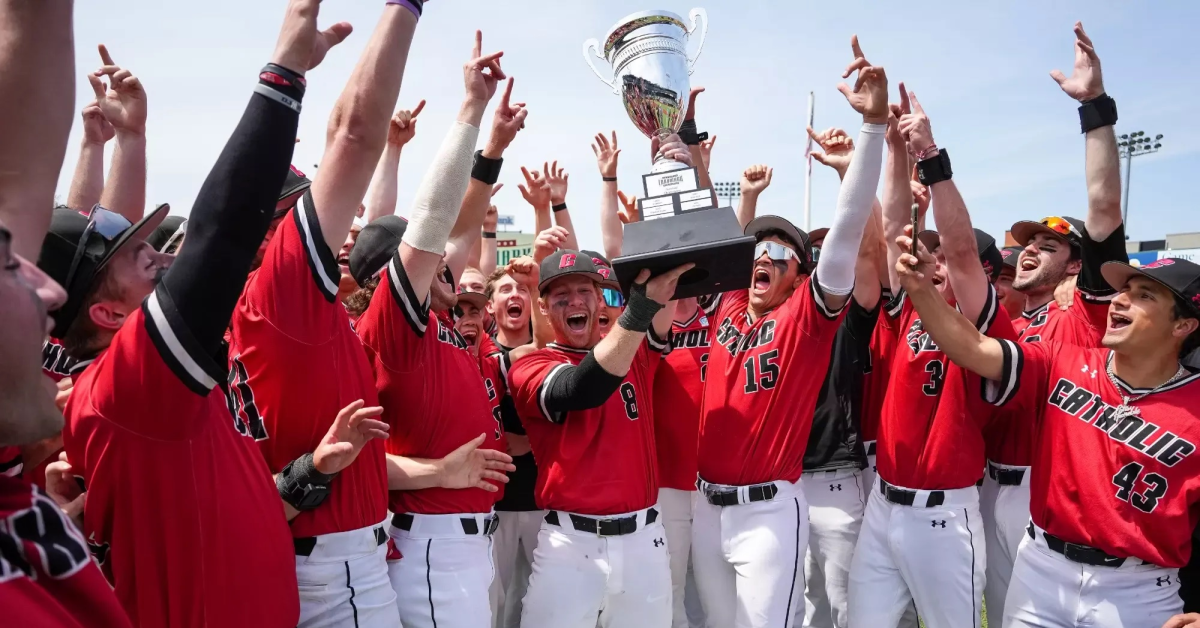
It's a palpable desire to sharpen the saw. I forget which motivational person said that – was it Stephen Covey? But the whole idea of sharpening the saw, or as you alluded earlier, “sweeping the sheds,” that you're looking for continuous self-improvement. And we've long done that and we've needed to do it right because we've had up years and down years in terms of on-field competition. This year, we had a great up year. We've had a couple Landmark Championships. I'm talking men's now, the women's has been even more successful in terms of its conference championships and its tournament experience. Super kudos to them and what Coach Meghan has done.
The fact that I already alluded to is that we search for that excellence, but we retain that set of core values. By talking to people and by doing many focus groups, I've come to learn that whether you're an OG Founding Father like me and my buddies, or whether you're one of the guys that just graduated, those same core values remain consistent. And when you see a culture that has those two things – that dedication towards sharpening the saw while at the same time having dedication to your core values – you got to like that.
Kevin Robinson
Magical stuff happens there. It really does.
So what prompted you to consider supporting Catholic University in such a significant way? Was it a gradual decision? Was there a turning point that led to that decision?
Brian Kennedy
Going back to being frank and direct, hopefully a little bit of what I've said so far gives you the answer.
Kevin Robinson
Oh, absolutely.
Brian Kennedy
It started when it started. Not that I knew I would eventually be giving this kind of gift when I realized the game was special. But once you realize the game is special and then things start happening in your life, it just kind of becomes evident that this is something that you want to continue to support.
The lacrosse community in general, but the Catholic University Lacrosse community in particular, is a family, I can't imagine my life without that family. And I know some of the other guys that I've mentioned today, and if we were talking about the women's program, we would share some of the women's names. I think lacrosse here is just as much of a family. So it's important and it's something that could never be taken away from me.
Kevin Robinson
And along the lines of thinking about the gift that you've made to Catholic University, what was your thinking about making this gift through your estate? Why make an estate gift?
Brian Kennedy
I'm not the first person to think this, but planned giving can be particularly transformative for people who may have the intention to financially contribute, but just because of the realities of life, needing to take care of themselves and their families first, that they may not during life be able to be like Joe Carlini, subsidizing the building of the Carlini Lacrosse and Soccer Field. Some people just don't have the opportunity to make a major gift during life.
Although I've been a giver to the program, I really wanted to be able to say that I was going to be giving in a much larger way. And as I talked to people like Patrick Dwyer and Isabel de la Puente, you know, it became obvious that really the best way to get a second bite at that transformative apple, was a planned gift. You can sit down, put pen to paper and see what you may not need to leave to others. And that allows you to make a much larger gift to benefit something that's really important to you.
We talked about opportunities before. I call it an opportunity.
Kevin Robinson
Was there a conversation, a visit, a game, or a person that kind of pushed you towards making that planned gift?
Brian Kennedy
Lots of things. One was, we talked about how my relationship with Coach Lillis has continued. He was probably younger than I am now when he first started coaching us. So now he's 94. And you start thinking about the 46 years of the program and what it's meant. We had, as you know, several years back, that 10th anniversary celebration of the Lillis Award winners with the halftime ceremony. You start having experiences like that and you start thinking legacy. You start thinking you want people to remember you. Maybe you, maybe everyone else, maybe the program, maybe where the program came from. What's one easy way to make sure a legacy is remembered? You put a name on something and maybe give a little bit of money.
Kevin Robinson
Regardless of your gift or not, your legacy will always be intact here in Catholic University.
Brian Kennedy
For better or for worse.
Kevin Robinson
It will always be there.
We talked a lot about the past, about the last 46 years. But tell me about your vision for this endowment. When you imagine it at work 20 or 30 years from now, what do you see?
Brian Kennedy
Whether it's reflecting on Coach Lillis and his transformative impact, whether it's reflecting on Coach Smith and Coach Plume, my high school coaches that we talked about before and how they were both excellent coaches. I mean, Coach Smith went on to be a three-time NHL GM. Coach Plume played at Colgate. These are people with jobs.
I think about my grandfather.He taught me how to ice skate and how to ride a bicycle. If I didn't start skating, I wouldn't have started playing hockey. If I didn't start playing hockey, I wouldn't have gotten Stan Mikita’s book. I don't get Stan Mikita’s book, I don't play lacrosse, and then maybe Catholic University doesn't have lacrosse.
So my original coach, and if you want, I got a picture on my smartphone. I'm four years old. It's the very first day I'm going for my very first skating lesson.
When you think about the power of coaching and you think about what it means to both on-field and off-field success. Once I decided giving to the lacrosse program was going to be a good thing to do, I had to ask, “What is the best way to do it?” From what I just told you, I said, not just coaching, but coaching excellence.
Occasionally people say, “Oh, the coaching fund.” No. It’s the Lacrosse Coaching Excellence Fund. This is not for average. This is for excellence.
As you know, the way the fund is set up, it's for the men's and the women's programs. It’s for either head coaches or assistant coaches. And it's at your discretion that wherever the need is greatest, to make sure that that area of the lacrosse program gets to move forward in the way it needs to. That's what we're going to do.
Kevin Robinson
I really appreciate you recognizing the importance of coaching. We've talked a lot about the impact coaching mentors have had in your life. To be able to fund that coaching excellence is just remarkable.
You made the planned gift, but what are some of those things that we're doing to get that fund off the ground now?
Brian Kennedy
One of the things we're doing is having conversations like this. And hopefully this will do a couple things to bring general awareness. Kind of like me back in the day, carrying a lacrosse stick around everywhere we went.
What that will do is get people to realize that we can do something now. We talked about identifying opportunities. I mentioned Neil Donahue before. One of the ways he's been a great supporter is, when he was helping me finalize this along with Scott Rembold, he said, “Why don't we potentially make this thing an actuality today?” Which, given the fact that a planned gift doesn't happen until you die, I thought would be a pretty cool thing, because I'd actually be around to see it and be able to celebrate it with all my friends.
So with Neil's help, we started an active campaign. We've already gone over $50,000 in pledges. You could ask Neil the exact number, but I think we've got close to $35,000 or $40,000 of that actually collected. Our two biggest numbers are to get to the $50,000 number so our principal income of the fund can come back to it and make it grow by itself. But then secondly, as soon as we can, get that number to $100,000. So that there will be some money to spend each year to help augment the coaching excellence of the program.
Kevin Robinson
100%. One of the big things for the men's lacrosse program, as we're looking forward, is bringing on a full time assistant coach. We have some incredible part-time assistant coaches right now that give a lot to the program. And we have our graduate assistants and alumni who have filled that role for the last couple of years. But having a full-time assistant will allow us to move the program more forward more quickly.
This endowment and getting it off the ground now is going to be a big push towards that full-time assistant, which is incredible. I really want to say thank you for doing that, and for you and Neil working together to have the foresight to say, “Hey, we got to get this going now.”
Brian Kennedy
You're right, I agree with you 100%. Whether it's the women's program with people like Clark and Erin in the assistant roles or people like Chris and Mo, who have been longtime assistants, they have made a huge difference here.When you're an assistant coach and maybe you have your own career, which some of them have their their “day job,” so to speak, and if they have a family, there may come a day where they don't want to but need to move on. And then we’ll have a big hole. And if this can help fill what may be a hole that we don't need to have someday, well, then that's a good thing.
Kevin Robinson
It's going to have such a lasting impact on that.
What do you hope a future CatholicU lacrosse player or coach will feel or know because of your gift, even if they never know you?
Brian Kennedy
All the above.
If there's any one story you want me to tell you about more… actually, can I tell you one other story?
It's when you never know when what's happening at that moment in time will be something special in the future.
You've already talked about it in terms of us being a bunch of young guys getting it started. Did we know or really contemplated the time that all these cool things would happen? No, but they did happen. And it's a great thing. And now we're finally older and wiser enough to continue to work to make sure they keep going.
But, you know, two stories: one that goes back to Mike Smith. Mike Smith, who was studying for his doctorate Russian studies at Syracuse University when he's coaching us in hockey, was taken over to the Red Army sports institute in Moscow the summer between my junior and senior year by Fred Shero, the infamous coach of the Philadelphia Flyers.
Those were the days – especially people from the Philly area, I know we have many here at Catholic University who are – the old Broad Street Bullies. Fred wanted to learn how the Russians played so that we could beat the Russians. And so, Mike came back, and for my senior year, we trained under Red Army training methods. And we went from being a marginally below average team to a marginally above average, but still an above average team. And he gave me a gift of learning this stuff from halfway around the world, from the best hockey team in the world. And guess what our practices were the first year at Catholic University?
Kevin Robinson
Red Army.
Brian Kennedy
Red Army.
It enabled us to take a really a mix of both talented and non-experienced players, and a mix of fit and maybe not so fit players, turn them into a fit team that was able to be competitive in our first season.
So did I know that when I was doing my wheelbarrows or my somersault races – which was one of the crazy things they used to make you do in the old days. You would skate the ice and you would do continuous somersaults. You couldn’t do that today, right? But we would do things like that, and it's one of the things that helped make us a better team.
Did I know when I was doing what the future impact would be? No.
Andy Youniss, who I don’t think we’ve talked about.
Kevin Robinson
We haven’t talked about him but he’s another strong contributor.
Brian Kennedy
Sports cliches come to mind when I think of Andy. They used to talk about, “Be like Michael Jordan.” Maybe one for us is, “Be like Mariann and Andy.” Because they gave very generously, several years back, their own lacrosse endowment. They have also been big givers to the Lacrosse Coaching Excellence Fund.
One of the ways we recruited was by being an RA in Spalding Hall. And if you were a freshman, one of your cultural activities that the RA had to make sure you engaged in was coming to at least three lacrosse practices. Well guess what? Andy was one of those freshmen. Andy liked playing lacrosse. And many years later, Andy was fortunately in a position to be able to make some generous gifts to the University. And fortunately for us, many of those have been to lacrosse.
And did he or I know that that was going to happen way back when? No. But that's one of the things is just to realize that you never know.
Kevin Robinson
All the interactions and putting yourself out there, building those relationships and creating opportunities. You as an RA being like, “Hey, come play some lacrosse.” Beyond that, is there a message you'd want to leave for the student-athletes who are going to benefit from this fund?
Brian Kennedy
As you're a player here, don’t be a taker. The fund is here to help support the program and to support future players. But the biggest message is: be a contributor. Whether it's today as a player, doing what you're doing as a teammate. Whether it's in the future, giving something to the program – time, treasure or talent, or hopefully all three, right?
Being a contributor is the way – speaking from personal experience here – you truly have your life remain relevant, but also remain relevant in a positive way in other people's lives. It’s a lesson that Tim Lisante and Tom Donilon taught me as a freshman, because they were contributors, and they never stopped being contributors.
Kevin Robinson
Well Brian, we can't thank you enough for the contributions you have made to Catholic University, Athletics, and Catholic University Men's Lacrosse especially. What the Brian F. Kennedy Endowed Fund is going to do for lacrosse is absolutely transformative and cements a legacy for one of the big time contributors to Catholic University Athletics.
I can't thank you enough for everything you've done, not only for our athletic department, but for me, in particular. Like I said three years ago, sitting down to talk at the old Brookland Pint – that's weird to call it the old Brookland Pint.
But how you welcomed me in and just gave me a real sense of what that intensity and passion for Catholic University is all about. So thank you for everything.
Brian Kennedy
Thank you for your words. And as you know, I truly value our friendship. I know you have all the sports to take care of, but the way you really take care of lacrosse really means an awful lot. And if I could leave you with, with two thoughts.
The one would be, this is Catholic University, right? So we took we talked a little bit before about Father Ed Branch, and we also talked about the Jesuit tradition that I was raised raised in, with Francis Xavier, Matteo Ricci. But I'd like to share with you a little Proverbs 11 this morning. “A generous person will prosper. Whoever refreshes others will be refreshed.” Words to remember.
And the last words to leave you with were those words we talked about before that ended up on our first bumper sticker. “CU Lacrosse. Watch for it.” Thank you, Coach.
Kevin Robinson
Thank you, Brian. Appreciate everything.
Published on: Thursday, July 16, 2026
Tags: Cardinal Perspectives, Athletics, Men's Athletics, Lacrosse